


Africa will not be last in line when the next global pandemic hits. This was the message CSIR scientists delivered to President Cyril Ramaphosa at the official opening of FuturePHARMA, a new national research facility in Pretoria, on 7 October 2026.
The facility forms the cornerstone of the Council for Scientific and Industrial Research’s industrial strategy to convert South African science into pharmaceutical products, industrial capability and health security – closing a gap that leaves the country reliant on imports for 98% of its active pharmaceutical ingredients (APIs).
The vision takes shape
The idea for FuturePHARMA took shape in 2019 as part of the CSIR’s industrial development strategy. Dr Rachel Chikwamba, group executive: CSIR Advanced Chemistry and Life Sciences, says the vision was already forming when Covid-19 struck and exposed the urgency of the mission.
“As that vision was unfolding, the Covid-19 pandemic hit and it became very clear to us that we were on the right path,” says Chikwamba, noting that Africa was at the back of the global queue for imported vaccines while supply chains for other essential medicines were disrupted.
“A hallmark of the pharmaceuticals sector is the heavy import dependence, with 98% of active pharmaceutical ingredients being imported into the country,” she explains. “On the other hand, South Africa contributes significantly to early-stage science outputs; our handicap is converting these outputs into products on the market. The strategic intent for FuturePHARMA is to convert South African science outputs into pharmaceutical products, industrial capability and health security.”
An innovation sandbox for normal times and crises
Over several years the CSIR secured support from National Treasury through the Department of Science, Technology and Innovation (DSTI), the Gates Foundation, the South African Medical Research Council, the Gesellschaft für Internationale Zusammenarbeit (GIZ), and the Kreditanstalt für Wiederaufbau (KfW) development bank.
Chikwamba describes the facility as an innovation sandbox – a controlled environment for testing, validating and scaling new products, manufacturing technologies, quality systems, workforce capabilities, and business models before commercial deployment.
“The challenge is that you cannot build emergency preparedness for pandemics and epidemics during the emergency itself,” she says. “So, we have established FuturePHARMA as an innovation sandbox during normal or non-pandemic times, which can be rapidly reconfigured to make clinical-grade products in a health crisis.”
The facility is now complete and operational, capable of scaling up biological and chemical production processes to bridge the gap between the discovery of a useful medical molecule and its safe, commercial manufacture. The last remaining hurdle is qualification of the facility by the South African Health Products Regulatory Authority (SAHPRA) to channel products into clinical evaluation.
Translating gene sequences into products
FuturePHARMA’s laboratories are geared to localise any biological or chemical process to produce medicines such as vaccines, antibody therapeutics, anaesthetics, painkillers, antivirals against infectious diseases, and treatments for chronic illnesses including tuberculosis, HIV/Aids and diabetes.
Dr Tsepo Tsekoa, CSIR chief researcher who leads the vaccines and biologics team, calls the facility a translational platform.
“We call it a translational facility because it translates early research and development towards what we call investigational manufacturing for clinical trial testing,” he says.
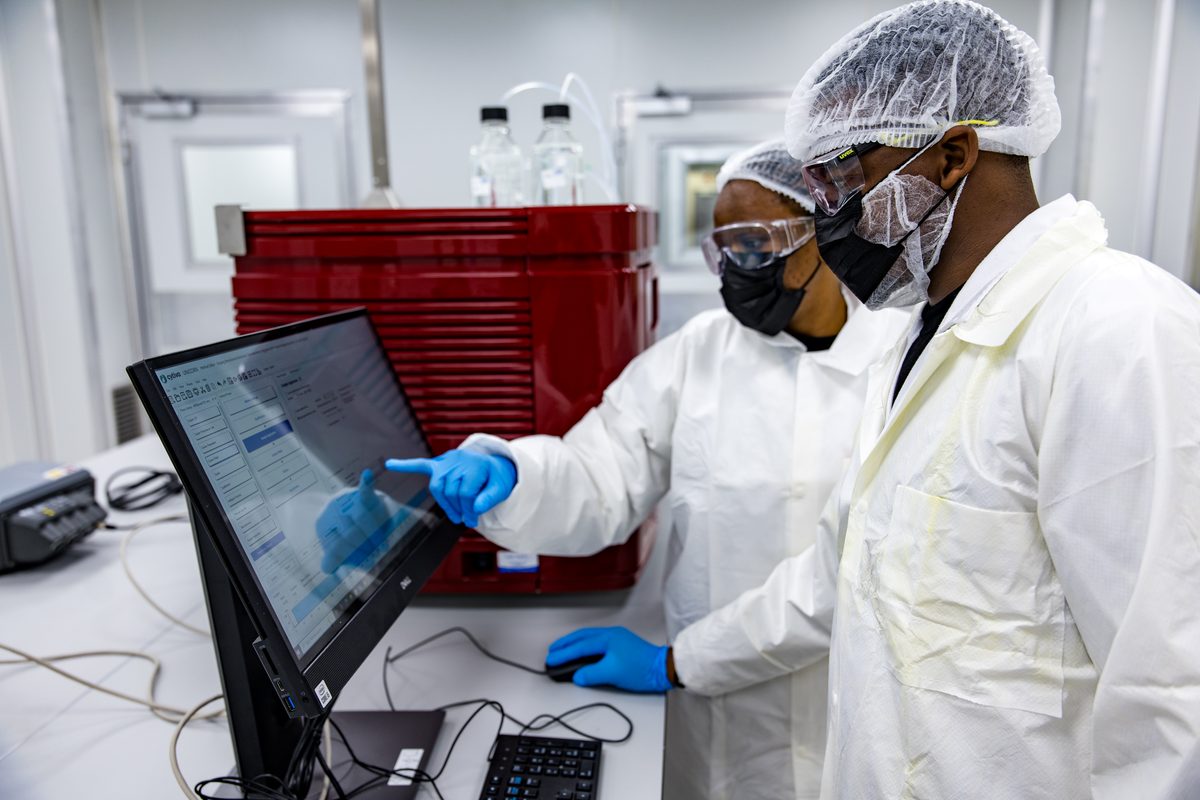
His team works in highly regulated clean rooms equipped with filtered air, specialised surfaces and sterile equipment to meet international good manufacturing practice standards. When a pandemic arises, the laboratory is ready to receive genetic information from the National Institute for Communicable Diseases and universities.
“This is what we call surveillance data, showing that there’s a spike in a particular disease,” Tsekoa explains.
CSIR scientists could then use genetic engineering tools to manufacture a vaccine against the virus or other disease agents, first at small scale to test its efficacy.
“Once we have some data to indicate that it’s beginning to work, we would begin to scale up the production in the same facility and then produce it for phase one clinical trials, to test it for the first time in humans.”
South Africa already has strong surveillance science and active vaccine manufacturers in the commercial and clinical space. The missing link, Tsekoa says, was translating gene sequences into products that can protect the country, and this is exactly what FuturePHARMA now provides.
Small molecules and continuous flow chemistry
Vaccines and biologics, produced in living organisms such as plants, yeast, bacteria and mammalian cells, are only part of pandemic preparedness. Many essential medicines needed during a crisis, such as headache tablets, chemotherapies and other treatments, require small molecules known as APIs.
These small molecules are made through chemistry rather than biological means and are then mixed with other ingredients to create a formulated tablet or liquid medicine. API production is the focus of the small molecules laboratory, led by CSIR chief researcher Dr Jenny-Lee Panayides. Her team is already scaling up the production of APIs for pain relief and breast cancer treatment.
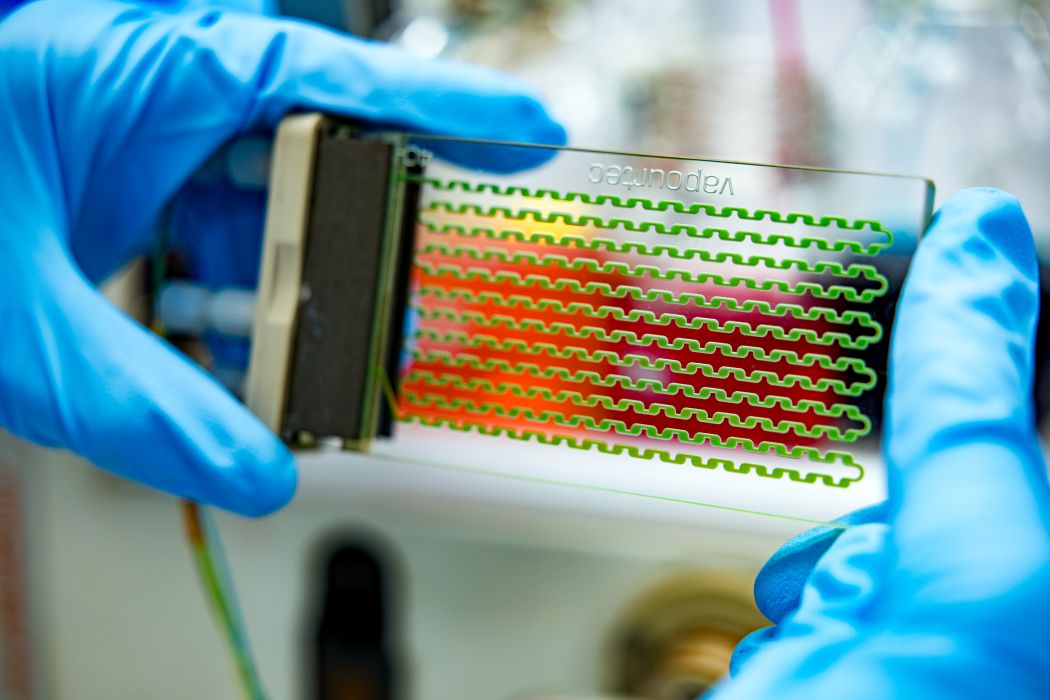
“We brought into the country a technology called continuous flow chemistry, which is basically where you’re doing your reactions in continuous streams, not in big vat reactors,” says Panayides. “That allows us to produce active ingredients much, much faster and with a much smaller footprint, so that we can access those materials that we need rapidly, and we can do distributed manufacturing at the site where we need them.”
The technology also positions local companies to compete internationally on cost.
“Firstly, we create the ecosystem where local companies could actually compete internationally in terms of the cost of the drug that they’re producing,” she adds.
WHO designates African biomanufacturing training hub
In June 2026, the World Health Organisation officially designated the CSIR as a regional training centre for biomanufacturing for the African Region, during a meeting at its Geneva headquarters.
Dr Santosh Ramchuran, CSIR chief researcher who has led the Biomanufacturing Workforce Training and Skills Development Programme for several years, says the designation brings existing localisation efforts to the global stage.
“This global programme focuses on biomanufacturing workforce development and training, with goals that are aligned to the CSIR’s commitment to strengthening local manufacturing of vaccines, biologics and therapeutics across the African continent,” he says.
Open doors for universities and small business
FuturePHARMA also hosts the Active Pharmaceutical Ingredients Innovation Cluster on behalf of the DSTI and the Technology Innovation Agency (TIA). The cluster pulls together resources from universities undertaking proof-of-concept work and industry partners capable of good manufacturing practice production or larger-scale manufacturing.
Chikwamba says FuturePHARMA’s doors are now officially open to universities and small businesses looking to turn their pharmaceutical product concepts into clinical-grade materials ready for testing.
“We de-risk the production of medicines that we know are of priority to our country, and then we transfer the mature product, prototypes, protocols and workforce to industry,” she says. “This sandbox sustains our readiness for a crisis mission.”
The next phase will see FuturePHARMA develop a contract development and manufacturing capability, expanding the scale at which the CSIR can do this work. Researchers will then explore how to competitively make critical day-to-day medicines while remaining on stand-by to generate products at scale in a crisis. “If the science is right, we can make it at scale, we can make it safely, and we can make it at home,” says Chikwamba.
Source: This article is based on content published by the Council for Scientific and Industrial Research (CSIR) on 7 October 2026. The original article is available at CSIR Media Hub.






Leave a Reply
You must be logged in to post a comment. Need an account? Register here.