
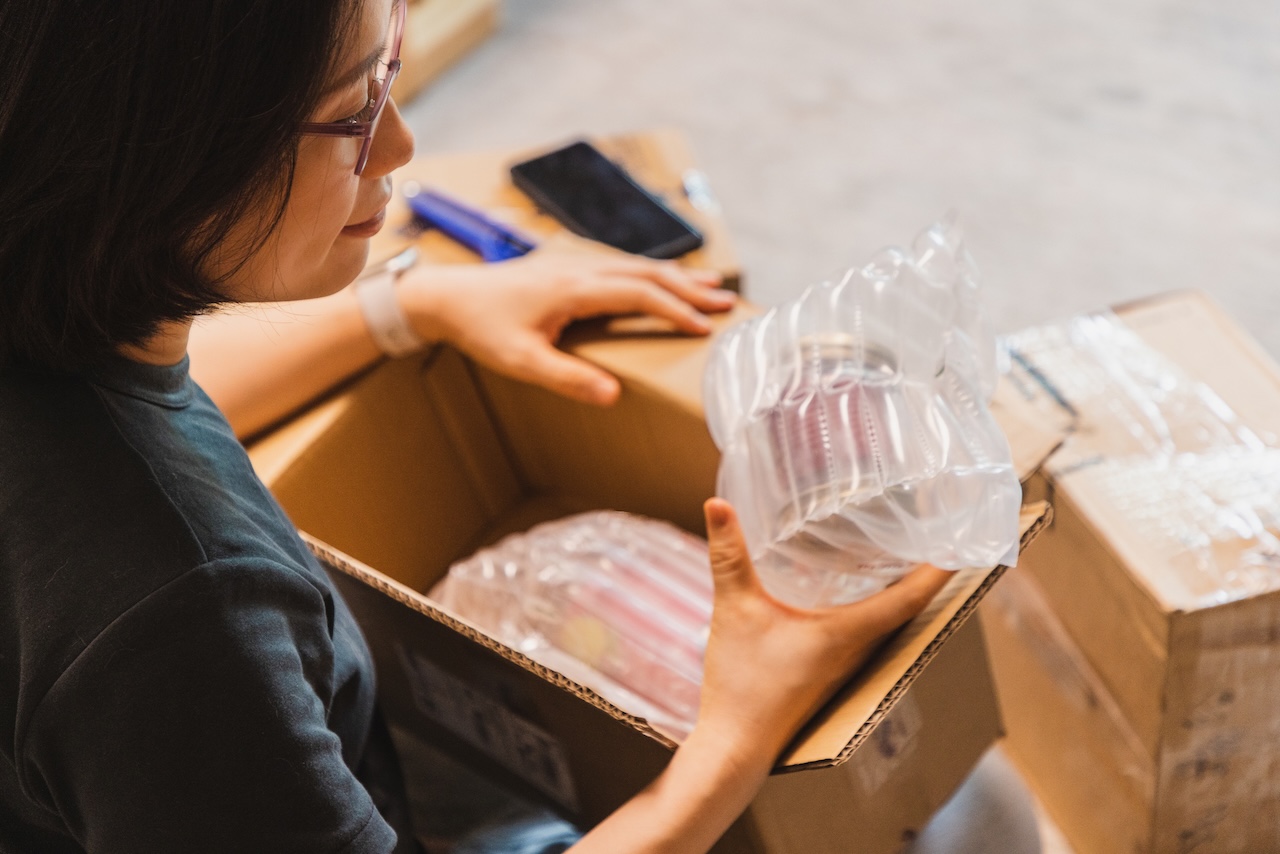
Plastics in e-commerce do far more than most shoppers realise. The break-resistant material protects goods, reduces packaging weight and prevents costly damage during transport. To mark the biggest shopping event of the year, the Plastic is Fantastic Association (PiFA) is highlighting the role of this versatile material.
Shipping volumes around Black Friday are enormous. It marks the start of an unprecedented surge in parcel deliveries ahead of Christmas. In the US alone, the industry handles around 2.3 billion shipments during the December holiday season. Weight matters here. If each package weighed just 10g more, trucks would carry an extra 23 000t over this short period. For example, heavier alternatives such as paper or cardboard would add the extra weight. Plastics in e-commerce therefore offer an effective combination of weight savings and protection.

Lightweight packaging supports transportation
According to forecasts, the global volume of parcel shipments could rise to nearly 500 billion by 2028. Freight weight is therefore a key factor for logistics. Lightweight packaging that also protects products keeps this weight to a minimum. Plastics in e-commerce fulfil both functions. Stretch films and void-fill films secure pallets and improve transport safety. Preventing damage from breakage also reduces costs and improves the environmental footprint by avoiding returns.
“Plastic is lightweight, versatile and conserves resources,” points out Dominic Fiel, executive director of the Plastic is Fantastic Association. “Blanket criticism often fails to do the material justice.”
For Fiel, the material’s properties make plastics in e-commerce indispensable for product safety and resilient supply chains.
Alternative packaging materials quickly reach their limits. For example, achieving the protection of an extremely thin sheet of bubble wrap would require enormous amounts of crumpled paper. As a result, packages become heavier, bulkier and more expensive to ship.
Philipp Lehner, CEO of Alpla, highlights the impact of reducing plastic weight: “Every tenth of a gram saved significantly reduces energy consumption when multiplied across large volumes.”
To reduce the burden of transportation, Alpla is researching further weight reductions through continuous improvements in material efficiency.

Recycling preserves the value of packaging
PiFA focuses on science-based education and a consistent circular economy approach. The aim is to highlight a material that often works behind the scenes. In practice, plastic should serve as a flexible, high-performance material throughout its entire life cycle. Fiel therefore calls for a shift in mindset. In his view, objective criteria should guide assessments of plastics.
Sandra Pechac is managing director of the platform Verpackung mit Zukunft (Packaging with a Future). She also advocates a fact-based perspective on the subject. Speaking figuratively on behalf of packaging itself, she says: “Please don’t judge me solely by the material I’m made of, but by what I can do.”
Used packaging, in Pechac’s view, is a valuable raw material rather than waste. Wherever possible, it should return to the circular economy. She emphasises: “We want to recognise the value of resources, preserve that value and use them for as long as possible. This requires cooperation across the entire value chain.”
Alpla’s Lehner, who champions the widespread adoption of design for recycling, confirms the wider benefit. “Recycling has long since become a matter of economic resilience,” he notes.
Reliable recyclate quality makes sustainability profitable
Jan Sültemeyer, global sustainability leader at Avient, a specialist provider of plastic formulations, agrees. The industry remains heavily dependent on fossil-based imports. So it needs to make greater use of raw materials available closer to home. However, recycled materials must be reliable and affordable to stay competitive amid retail price pressures.
“Sustainability will only be implemented if it is affordable,” emphasises Jan Sültemeyer.
In the high-pressure environment of logistics centres, packaging containing recycled material must not be expensive, tear or show visual defects. Avient addresses this challenge through a dual technological strategy, developed in its own recycling laboratory. First, a software solution uses digital predictions to determine the achievable colour of packaging made from pre-coloured recycled material. This saves brand manufacturers costly laboratory testing during adjustments. Second, specialised molecular additives stabilise the material’s structure. As a result, the recyclate becomes impact-resistant and tear-resistant enough to withstand the extreme demands of parcel handling. This protects the tight margins of online retailers against costly transport damage.
Packaging remains the foundation of consumption
The EU aims to advance a genuine circular economy. Two regulations drive this goal: the Packaging and Packaging Waste Regulation (PPWR) and the Empowering Consumers Directive (EmpCo). For Lehner, this transformation also sends an important signal to the next generation. Anyone who truly wants to act for the climate can find a powerful lever in packaging optimisation.
Nevertheless, Fiel warns of market distortions. “Although Europe’s recycling targets for 2030 are drawing closer, the European circular economy is at risk of coming to a premature end.”
Cheap imports are undermining recyclate prices. Policymakers must therefore take countermeasures through tariffs. Only a stable domestic circular economy can keep the logistics behind Black Friday affordable.
In short, plastics in e-commerce protect goods, save weight and preserve value. However, that value only endures when the material returns to the loop.






Leave a Reply
You must be logged in to post a comment. Need an account? Register here.