
Five major steps in the cosmetics R&D chain
‘Green’ is in as a cosmetics industry trend. ‘Paraben-free’ has become one of the most common label claims, but if cosmetics are made without a proper substitute for this preservative then the finished product may have a chance of microbial contamination.
Instead of focusing so intensely on labels that tend to mean different things to different people, companies should rather be investing in the solid science needed for clean cosmetics development, says Dr Aurelie Demont,product specialist from Büchi Labortechnik Ag.
She adds: “The one label that cosmetic products and their consumers deserve is ‘made with care’ – Care for human health. Care for work conditions. Care for the process. Care for the environment.”

Technology, R&D and innovation
Throughout its full value chain, the cosmetic industry should make a positive contribution to the ecosystems and the environment. Innovation needs to be constant for brands to be able to update their products and to continue staying in line with customer demands. Manufacturing and commercialisation also need to follow strict rules, which are constantly changing. One can therefore say that technology, R&D and innovation are at the heart of the cosmetics industry.

These are the five steps to create environmentally and ethically friendly solutions for formulations and give consumers high-quality performing products with the best possible materials.
- Sourcing raw materials
This needs to adhere to norms and regulations and must support conservation and sustainability of genetic resources, with the aim of enhancing biodiversity and human welfare.
2. Screening of active ingredients
Raw materials are systematically screened for active ingredients. Frequently, natural ingredients are extracted (UniversalExtractor E-800, SpeedExtractor E-914), purified (Pure Chromatography systems) and concentrated (Rotavapor R-300). Then specific cosmetic properties such as whitening, anti-oxidant, anti-elastase, anti-hyaluronidase, anti-inflammatory, anti-collagenase and many more are tested.
3. Formulation of a finished/intermediate product
This aspect is both structural and functional. There must be a strong affinity between the structural ingredients to produce a desired physical form. This step may include discoloration or deodorisation steps for marketing purposes.
During formulation, spray-drying (Mini Spray Dryer B-290, Encapsulator B-390) and freeze-drying (Lyovapor L-200, L-300) are commonly used to dry emulsions and prepare solid ingredients.
4. Development and packaging
R&D processes are scaled up at this point to enable development of large quantities of product. This step also involves improving the use of materials, discarding faulty batches before or during R&D, guaranteeing suitability of the packaging, assessing the durability of products and ensuring product consistency.
5. Quality control of intermediates and finished product
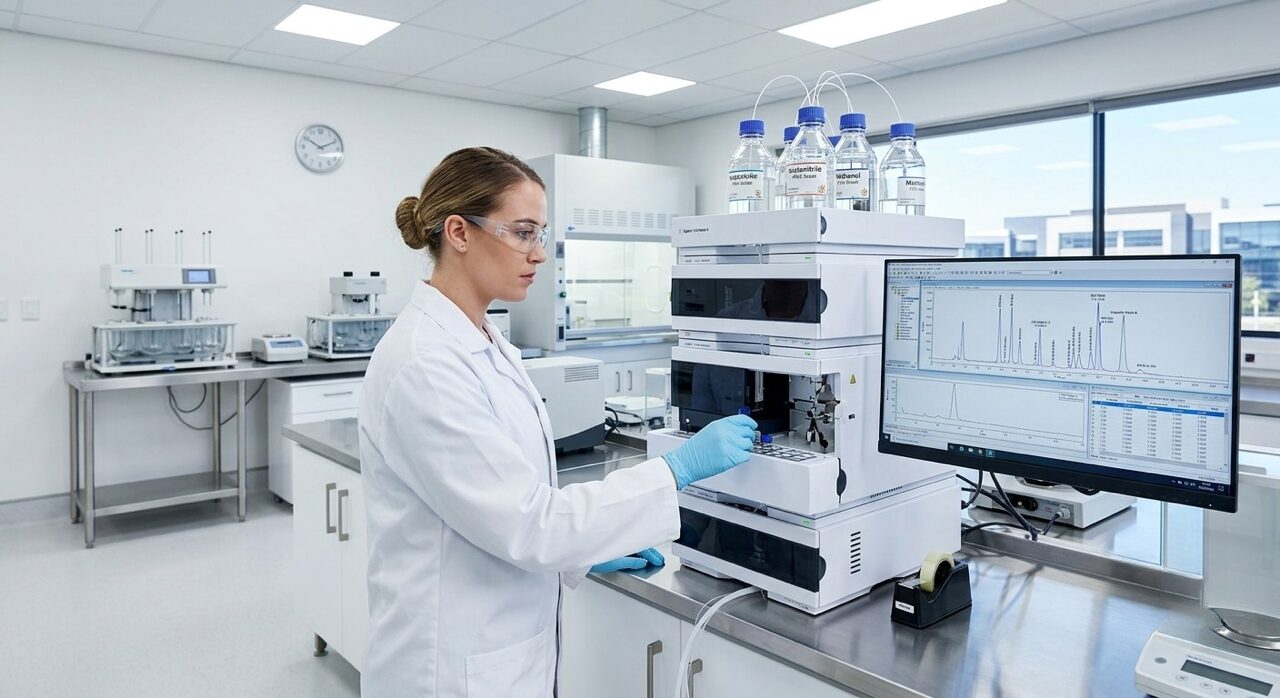
Quality control is performed over the entire value chain to make sure products meet requirements and regulations. This involves checking intermediates or final products for odour smells, reactions with skin, expiry dates, leakage checking of the packaging, function tests and workmanship checks.
Sample preparation for analysis of metals can be facilitated using the Buchi Digestion Portfolio. The NIRFlex N-500 FT-NIR spectrometer provides reliable identification and quantification of substances and is ideally suited to QC and R&D purposes.
Article adapted from Buchi Labortechnik AG; products supplied locally by Labotec.



Leave a Reply
You must be logged in to post a comment. Need an account? Register here.